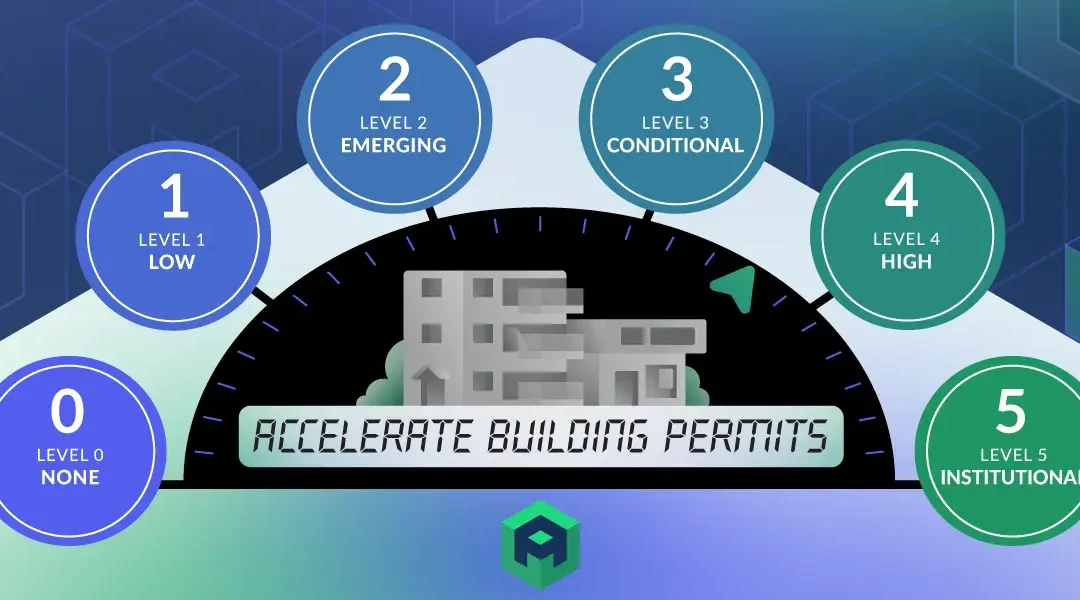
- The City of Burlington and Archistar brought AI-powered plan review—AI PreCheck—to building permit applications under the Ontario Building Code (OBC), starting with low-density residential housing (single detached dwellings).
Data shows the applicant side of each plan-review cycle is significantly longer than the City’s, and by increasing the quality of initial submissions with AI PreCheck, Burlington has seen early review time reductions.
Burlington has plans to expand AI PreCheck to other building types and to eventually test it with OBC Part 3 projects like multi-unit mid-/high-rise buildings.
We’re currently realizing an efficiency gain of approximately 15% on a two-hour process for the relevant OBC sections. As the solution evolves and expands across more areas of the building code, we expect those savings to grow substantially.
On any given Sunday night in Burlington, Ontario, design firms race to put the finishing touches on building plans to turn in at the start of the week. They tie up setbacks, window calculations, and other loose ends. Their next clients are already waiting.
When those permit application packages land on the building department’s desk on Monday morning, Nick Anastasopoulos, Chief Building Official/Director of Building Department, City of Burlington, can make an educated guess on what’s inside. For nearly 30 years of working with the Ontario Building Code (OBC), he has seen varying levels of completeness cause persistent delays. They can cause weeks or months of back-and-forth review cycles that nobody wants—neither the architect nor the City, and certainly not the eager homeowner.
These delays are not tenable for the future, as the City is striving to meet an ambitious goal of delivering 29,000 more housing units by 2031.
Burlington is a technology-forward city, but what it didn’t have until recently, was a technology to proactively address application completeness at the outset, in order to reduce delays and improve the customer experience.
By partnering with Archistar, Burlington sought to catch the problems inherent with submissions needing further refinement before they became time sinks. This decision would not replace professional examiners but rather train the technology to interpret the OBC the way they do, and hopefully over time, trust it to do so.
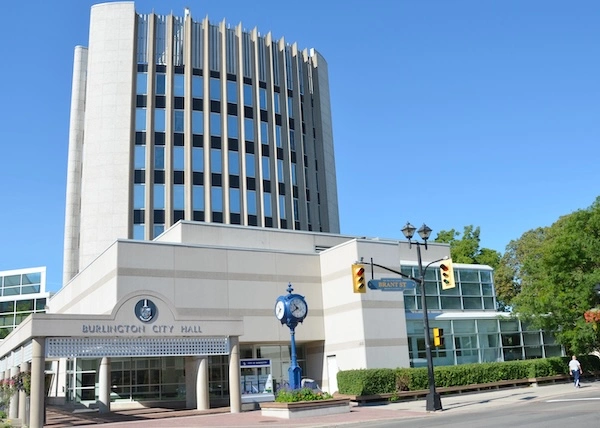
The Burlington City Hall building in downtown, Burlington, Ontario.
An Industry Opportunity: Enhancing Permit Application Quality
The OBC is not exactly beach reading. However, the province has established an independent expert advisory body known as the Building Code Advisory Body (BCAB) to review the Building Code and reduce regulatory burdens and costs while maintaining safety. Ontario recently released the Interim Report on the OBC review to outline the BCAB’s recommendations and key themes to date.
This ongoing review will help modernize the Building Code by removing outdated or unnecessary requirements. It’s work that has already begun in phases. The 2024 Ontario Building Code eliminated more than 1,700 technical variations between provincial and national requirements.
“We’re talking about technical complexity not just for building officials, but the design industry too,” Anastasopoulos says. “Every time a rule is changed, it creates complexity for all of us in the development industry.”
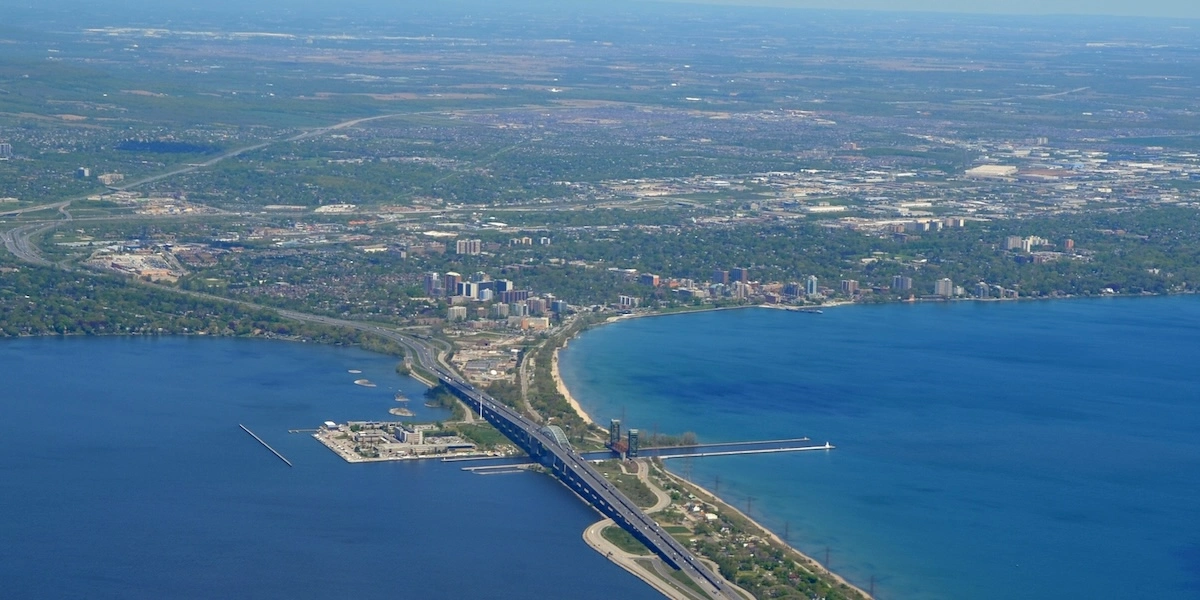
Burlington, located in the Greater Toronto and Hamilton Area, at the western end of Lake Ontario, has also run up against geographical limits. The City has essentially run out of greenfield development, so it’s building up, not out.
“A lot of it is existing neighborhoods and plazas are being redeveloped,” Anastasopoulos says, “and typically those sites are more complex.”
Infills and redevelopment have more constraints, more context to fit a design into, and more ways in which a plan can fall short of code requirements. For all of the above reasons, building plan submission incompleteness has become a concern endemic to many municipalities, not just Burlington.
“Other chief building officials I speak to have the exact same issue, whether in Ontario or British Columbia,” Anastasopoulos says. “The common theme I hear across the board is the initial submissions and their completeness. I’ve spoken to building officials in the States, where they are experiencing similar issues.”
Because the complexity of modern building codes affects everyone in the development space, Anastasopoulos has sympathy for designers who may submit plans with varying levels of completeness, and he’s happy that technology can help them.
“There’s a lot of pressure on those design firms, but that’s why we’re seeing submissions coming in at 70% completion. If they were 80–90%, you’d get through the review process much easier.”
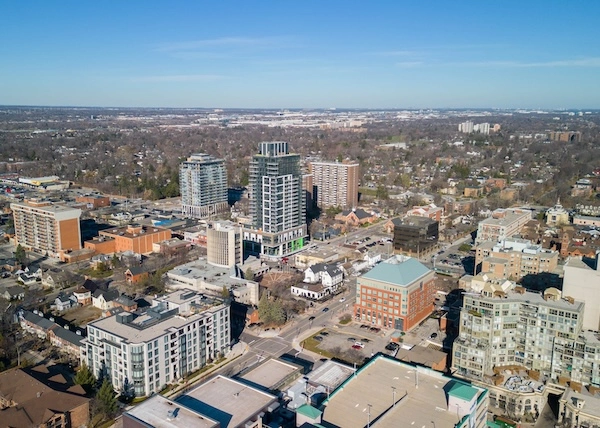
The City of Burlington, Ontario began using AI PreCheck on single, detached housing and may soon expand it to certain larger mixed-use and multi-unit residential projects.
Building the Business Case with Data Visualization
During an early meeting with Archistar, Anastasopoulos had what he calls a “lightbulb moment” when he thought about trying Archistar’s AI plan review platform with the lowest-hanging fruit in the OBC. Like other Canadian building codes, the OBC is split into Divisions and Parts. Within Division B there are 12 “Parts,” each one for a different category. Part 9 covers small buildings up to three storeys and 600 square meters of building area, including most low-density residential, single detached homes.
“It was a good place to start,” he says. “Let’s cut our teeth on a segment that’s very prescribed.” For Part 9 projects, the OBC lays out many measurable items, like floor plates, room sizes, window areas, and so on. It has the least room for interpretation in the whole code, making it the safest place for Burlington to try to prove the concept.
Yet before launching an AI pilot, Anastasopoulos and his team had to prove the business case. With the help of colleagues, they used Microsoft Power BI data visualization to illustrate their database figures for the number of review cycles and permit issuance for projects of different scopes and complexities. The data showed that the Burlington building department returned applications in 9–10 days, but it then took 15–17 days for applicants to resubmit. Compounding that over multiple review cycles created lengthy delays largely on the applicant’s side.
“The delays are typically not caused by homeowners,” says Anastasopoulos. “More often, they occur because consultants are managing multiple projects simultaneously and may need additional time to address OBC comments and prepare revised submissions.”
He made the case that the most immediately solvable bottleneck in the system was the quality of building plan submissions. Significantly raise their quality, and the result would be fewer application problems and fewer review cycles.
“As Chief Building Official, my focus was on data and transparency,” Anastasopoulos says. “By leveraging data visualization, we were able to clearly tell the story of our performance, helping council understand the realities, challenges, and successes of building department operations.”
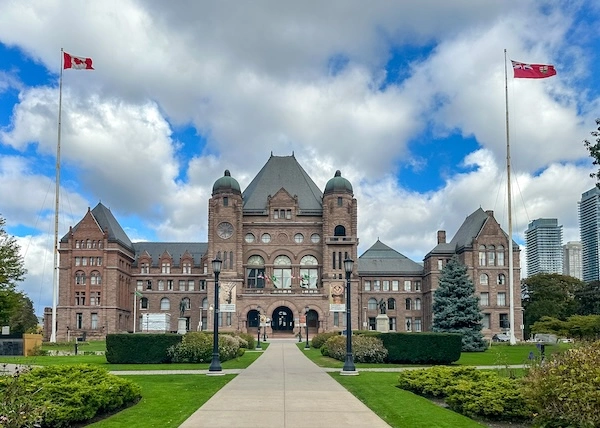
The Ontario Legislative Building in Toronto, Ontario, Canada is where changes to the Ontario Building Code (OBC) are discussed.
Change Management and Earning Trust One File at a Time
With an Archistar AI PreCheck pilot approved, the next step was gradually folding the technology into workflows and practicing change management.
“Anytime you change a process, you’re going to have change adopters and change resisters,” Anastasopoulos says. “It’s a little more escalated for us because we deal with life and safety matters within the code.”
Because there’s also a stigma of possible job loss around artificial intelligence, trusting the tool took time and a deliberate ramping up to earn the staff’s trust. It was a gradual pull-back from fully manual plan review. Anastasopoulos says that plan examiners looking at stair designs, room dimensions, spatial separations, and so on would compare AI PreCheck’s output against what they would have done. Seeing the software’s output aligned with their own assessments helped win the staff over.
“You start to check every other result, and then every fifth one,” he says. “Then you just do periodic spot checks. You start moving back and say, ‘I trust that application. It’s been designed with good intent and good interpretation of the code.’”
Rather than dictate to department staff, they involved the staff in validating AI PreCheck by using it firsthand. That way everyone could see that the minutes that AI PreCheck saved them could be directed toward other aspects that require interpretation and need their professional eyes.
On the permit applications Burlington is applying AI PreCheck to, Anastasopoulos estimated a 15% time-savings for the relevant OBC sections, with possible further efficiencies. He frames the technology’s success so far as increasing capacity for everyone, and not replacing anyone.
“The intent to this whole process was that there were no job losses, but rather to assist the industry as a whole—including individuals on both sides of the counter,” he says. “By reducing the burden, you’re raising the quality of submission, and that’s a good thing for everyone.”
Before
After
Burlington’s Results Could Be a Model for the Province
In proving the need for AI plan review software, Burlington got a defensible picture of where the most fixable delays occur. In implementing AI PreCheck, the City freed up staff capacity that it could redirect to other work that Anastasopoulos says should stay with plan examiners, such as structural load paths, mechanical systems, and emergency exits.
“Structural design and fire separations are the integral foundation of every building code around the world,” he says. “We want building officials in the loop because at the end of the day, our loved ones are going to work or live in one of these buildings.”
However, looking ahead, there’s plenty of room to expand what AI PreCheck does for Burlington. Anastasopoulos mentions lower-risk options like accessory dwelling units (ADUs), septic systems, and garages. And eventually, he sees it expanding into the OBC’s Part 3, which features larger and taller buildings than Part 9, including mixed-use and multi-unit residential.
“Right now, I’m trusting the system that gives approximately 15% savings out of two hours,” he says. “As you expand the code and the solution takes over more sections, we will see significant savings. But the intent is bigger than the actual numbers. You’re creating a standardized approach to completeness and compliance before it enters the municipal process.”
If raising the quality of building permit applications at the point of official submission can reduce review cycles, it can also reduce developer costs and inconveniences like escalating fees, losing a contractor, or seasonal scheduling. Anastasopoulos says enhancing application quality is the most impactful driver to improve service delivery.
“Finally, we’re talking about a solution where we’re actually dealing with the issues even before they submit, which is the perfect spot,” he says. “That’s where the focus should be.”
That advice extends to all the other 444 Ontario municipalities subject to the OBC. Anastasopoulos wants them to know that if Burlington can implement AI permit review software with the OBC, they can too.
“If I were in their shoes, dealing with incomplete or lower-quality submissions, I’d be looking at a solution that raises the bar,” he says. “It helps everyone. The owner and the consultant: reduced cost. The municipality: less burden; fewer review-cycles. There are so many wins along the way.”
Burlington's Ongoing Journey to Enhance Permit Application Quality

JUNE 2024: FROM PILOT TO ADOPTION
Three-month pilot completed (limited to certain sections of Part 9); City of Burlington adopts the Archistar platform for plan review.

NOVEMBER 2024: PRODUCTION IMPLEMENTATION
Compliance for OBC Part 9 projects as a named work stream.
2024–2025: INITIAL TRIAL
15–20 applications pushed through repeatedly to refine and validate against examiner judgment. Early savings of 15% per file identified.

2025–2026: AI PRECHECK TESTING
AI PreCheck testing combined Completeness Check and Compliance Analysis assessments in one pass; ~20 new applications in trial; readiness scores rising toward 85%.

AUGUST–SEPTEMBER 2026: RECOGNITION
On August 12, the City of Burlington was named an IDC CIO Awards Canada 2026 Winner for “AI-Enabled Ontario Building Code and Zoning Compliance Platform.” On September 17, the City of Burlington won the 2026 Vision Award of Excellence at the Ontario Professional Planners Institute (OPPI) conference for “Assistive AI Tool For An Improved Development Review Experience.”
STILL TO COME
Expansion beyond OBC Part 9 toward Part 3 (mixed-use, multi-unit, mid-/high-rise) and other use cases.