

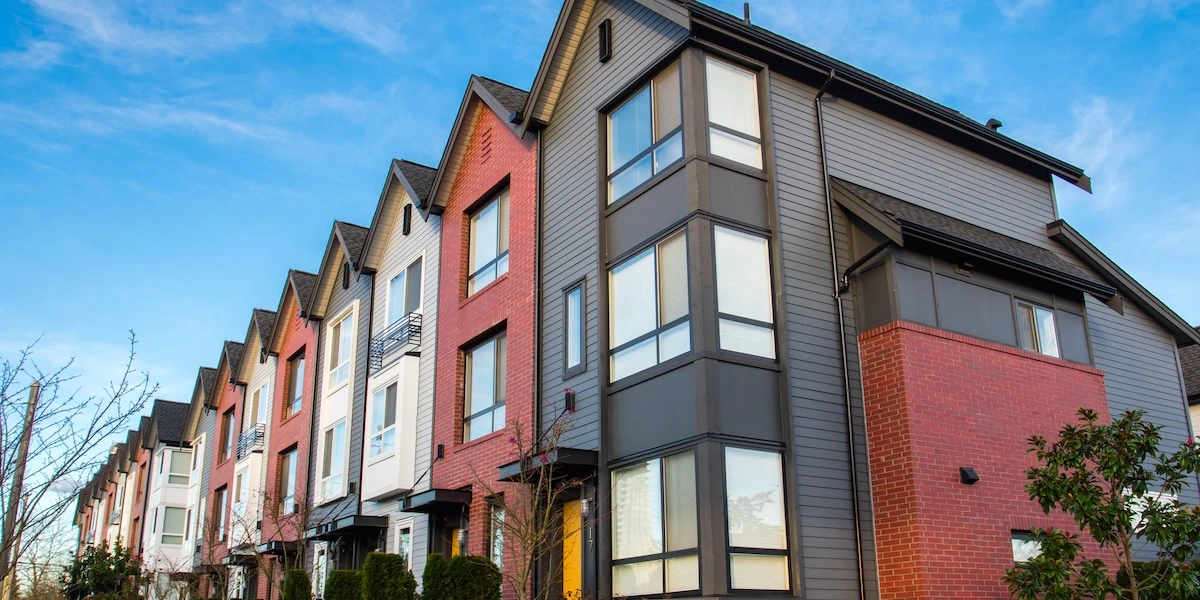
In various places across North America, state or provincial governments, in an effort to do something about the lack of housing (particularly “missing middle” housing), have imposed housing density mandates upon their constituent local governments.
In particular, British Columbia’s Bill 44 from 2023 mandated that BC municipalities pre-zone for at least four units on single-family lots. The problem, however, is that not all of those cities and towns have either the existing infrastructure, or the funding for the infrastructure, to support that increase in capacity. Bill 44’s goal to unlock the housing supply suppressed by decades of exclusionary zoning may be worthy and necessary. However, its effect in places like North Cowichan on Vancouver Island was to promise a building bonanza without the means to deliver.
In his presentation, Countdown to Detonation: Bill 44 and the Infrastructure Time Bomb, at the PIBC 2026 Annual Conference in Vancouver, Chris Osborne, Senior Manager of Planning and Environment, Municipality of North Cowichan, says “We’ve showered the community with drinks tickets, but there’s only so many bottles behind the bar. And we’re hoping they don’t all come forward to redeem them.”

In places like North Cowichan, British Columbia, fulfilling Missing Middle density mandates will take expensive updates to the water mains.
When Zoning Mandates Outrun Infrastructure
North Cowichan is a district municipality of about 32,000 people, with three separate water and sanitary systems serving three distinct community centers. Not only were none of those systems designed for the density Bill 44 mandates, but neither does North Cowichan have the deep tax base or regional infrastructure agreements that larger cities have in order to try to catch up.
Osborne’s co-presenter, Clay Reitsma, Director of Engineering, Municipality of North Cowichan, laid out the scenario numerically. North Cowichan collects about $7 million a year for infrastructure renewals, but the upgrades for Bill 44 compliance could require $32-35 million a year.
In addition to the fiscal shortfall, there’s an infrastructure problem. If a single-family neighborhood’s water mains fire flow is 60 liters per second, but a fourplex requires 120 liters per second, the pipes must be upgraded before building permits can go through.
In both planning and engineering terms, “Density is our friend,” Osborne says. The long-term economics of denser development are quite good. It distributes infrastructure costs and costs less per unit to service over time, as well as reduces irrigation demand. “The friction point is moving from a low-density, suburban, quasi-rural paradise to something recognizably more urban,” he says. “That’s where the pain lies. Development suddenly bumps up against the ceiling, and you’re turning down everything in sight.”
During the painful transition between a mandate’s new zoning rights and when the infrastructure can support them, permit applications arrive that technically comply with zoning but don’t have the services to support them. In that case, turning down those applications may be legally defensible, but politically, it’s a different story.
“It’s politically embarrassing to say, ‘We’d love to approve it, but we don’t have the servicing capacity, and we don’t have a good plan to get the servicing capacity,’” Osborne says. “It’s intolerable.” If the infrastructure eventually does catch up, the pent-up demand then overwhelms processing capacity. “It’s real boom-and-bust stuff,” Osborne said.
North Cowichan has responded with new servicing allocation policy, infrastructure modeling, DCC (development cost charges) bylaw updates, and what Osborne calls trying to “beg, borrow, steal as much as we can from senior levels of government.” Those higher levels of government had the right type of housing in mind, just not enough help for places like North Cowichan to implement it.

The skyline of Burnaby, British Columbia (with Vancouver in the background), shows the effect of Canada's Grand Bargain on the landscape, where suburban sprawl butts up against high-rise towers.
Why Encouraging Missing Middle Housing Is the Right Thing To Do
Analyses of BC’s housing needs show that the missing-middle housing types Bill 44 unlocks, including duplexes, triplexes, and fourplexes, are exactly what the province needs. They may not be the least expensive to build, but they fill in the gap between the detached houses people imagine having and the downtown condos that supply the main alternative in most supply-constrained markets.
Presenting at PIBC’s “Housing Needs, Demographics Change, and the Role of Planners” session, Kevin Green, Associate Director, CitySpaces Consulting explained that people have a deep cultural preference for detached houses, but that’s partly a product of what’s available. When you’ve only lived in suburban Edmonton, detached housing looks like the only viable option. If you’ve lived in Montreal’s Plateau, Vancouver’s West End, or a well-designed townhouse complex, your preferences may shift.
It’s not that people need to accept less. Rather, ground-oriented missing-middle units with outdoor access, family-sized bedroom counts, and proximity to schools and services can meet the same needs as detached housing, but at an attainable price point. “But for that to be a viable alternative,” Green says, “those homes have to actually exist.”
However, in the “Grand Bargain” that Green described, Canadian cities struck a deal decades ago to allow tall towers downtown and sprawling suburbs at the edges, leaving a large gap in the middle of the housing spectrum. Zoning rules largely squeezed out multiplexes, townhomes, mixed-use low-rise, and three-to-six story wood-frame buildings from most neighborhoods. Bill 44 attempts to renegotiate the Grand Bargain, but to build the units, the infrastructure has to be there.
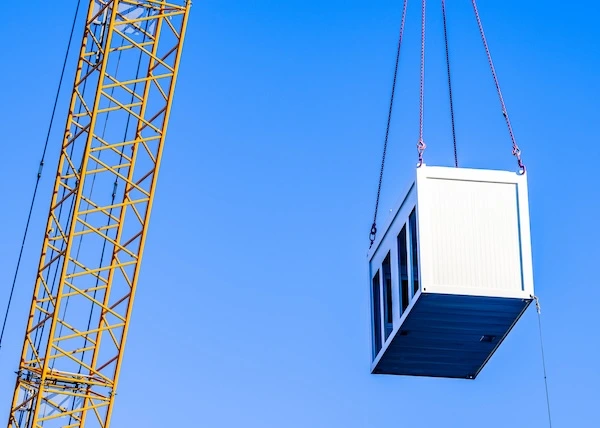
British Columbia's DASH initiative can shorten the timeline for housing projects by taking advantage of prefabricated components, modular building, and AI building permit approval software.
It Takes a Village to Build a Village
Between mandating housing density with legislation like Bill 44 and physical delivery lies an expanse of coordination and cooperation. BC’s DASH (Digitally Accelerated Standardized Housing) initiative attempts to compress that distance and timeline by standardizing the design and permitting process for missing-middle categories.
DASH brings together BC Housing, Metro Vancouver Housing, and a cluster of technology and design partners, including Kope and Archistar. It proposes to distill missing-middle housing production to a “kit of parts” approach: standard, “productized” components, configurable into different building footprints and styles. It could reduce some of the design and construction overhead that often makes three-to-six story wood-frame projects economically marginal.
By building with standardized components, structural performance can be pre-validated. And with designs pre-configured within known parameters, permit reviews against zoning and building codes could go much faster. The DASH system claims 75% fewer back-and-forth review iterations compared to a conventional permit application submissions.
BIM (building information modeling) and a building’s digital twin within the BIM data are central to the DASH approach. Each DASH project follows the digital twin from design to permitting. It flags potential issues in the digital design before they become revision cycles because it’s integrated in real time with local zoning bylaws and building codes. Ideally, the system is designed to deliver to a building department that design plans and permit application data already configured to fit within allowable parameters.
At the Building Officials Association of BC (BOABC) 2026 conference session, Advancing DASH: Digitally Accelerated Standardized Housing, the system was presented as a example that should spread far and wide.“This isn’t just a BC Housing tool. This is really for everybody,” says Dr. Esther de Vos, Executive Director of Research, BC Housing. Private developers could bring their own product lines into the DASH framework to enjoy its permitting efficiencies without limiting themselves to social housing typologies. The larger vision sees DASH expanding beyond BC into other provinces.
Archistar’s component of the DASH equation has already had great effect, for example in the province of Ontario, where the City of Markham’s Chief Building Official called Archistar technology a “companion tool” that helped more than double Markham’s permitting capacity. Its automated zoning compliance and building code pre-check capabilities are built into DASH’s real-time regulatory integration.
However, while faster permitting can compress the timeline between permit application and occupancy, it does nothing to solve the infrastructure problem. A DASH-designed fourplex in North Cowichan might save money on design, construction, and permit-related carrying costs, but it won’t pay for upgraded fire flow piping.
The Missing-Money Trouble with Density Mandates
North Cowichan is not alone. Dozens of other municipalities are in a similar situation in BC, as well as other North American regions where zoning mandates have come down to local governments without accounting for necessary infrastructure upgrades. While North Cowichan recognizes that Bill 44 intervenes correctly in favor of missing-middle housing, it still doesn’t fund its way out of the density problem.
Initiatives like DASH can make much needed inroads to accelerating housing delivery. However, design standardization through DASH or density mandates like Bill 44 won’t alone solve housing supply without closing the infrastructure gap.
Housing density mandates will likely need DCC bylaw updates as well as cost-sharing mechanisms from higher-level governments. Without the political honesty that density mandates need to come with some path to upgrading the necessary water, sewer, and other infrastructure, they may lead to the unwanted boom-and-bust cycle that Osborne and Reitsma warned against.