

- Discover seven tips to help cities prepare before fires, hurricanes, earthquakes, or other disasters strike.
- These practical planning strategies—from Like-for-Like rebuilds to AI-powered permitting—turn uncertainty into clarity.
- Resilient recovery depends on clear rules, trusted data, trained staff, and incentives to enable faster and more equitable recovery for residents.
It’s been more than a year since the Eaton and Palisades fires ignited in Los Angeles. The road to recovery is ongoing—and will be for a long time. As of this writing, nearly 3,000 building permits have been issued across the City of Los Angeles, LA County, and Malibu.
The word “resilience” is often used to describe recovery or withstanding disaster, but true resilience goes much deeper. The United Nations Office for Disaster Risk Reduction uses these verbs as part of its definition of resilience: “resist, absorb, accommodate, adapt to, transform, and recover from.”
To me, resilience is about how quickly, intelligently, and equitably a community recovers.
When disaster strikes—whether it’s a flood, fire, or earthquake—people aren’t thinking about frameworks or zoning. They’re thinking: “Can I rebuild my home? Can I rebuild my life?”
None of these people were planning to build a house or go through this process. Most of them have never built a house before, and they’re not mentally prepared for it.
It’s also a complicated process fraught with difficult decisions. For example, fire survivors in Altadena (where the Eaton fire took place) not only have to consider when their insurance will come through, but they have to take into account whether the payout will be enough to build what they want. And will they be able to remediate the hazards on their property before building?
They also have to consider what’s happening in their community. Are schools and businesses in the area sitting on now-toxic land—including contaminants such as lead and Volatile Organic Compounds (VOCs)? How will the LA community build back in a safe and more resilient way?
This isn’t just a “them” problem. According to NASA, the number of extreme wildfires has more than doubled worldwide. Meanwhile, smoke and contaminants can travel thousands of miles.
But cities that prepare now rather than react later can turn months of uncertainty into days of clarity. Here are seven strategies that can help mayors and city managers prepare for recovery—building systems that restore not only buildings, but communities.
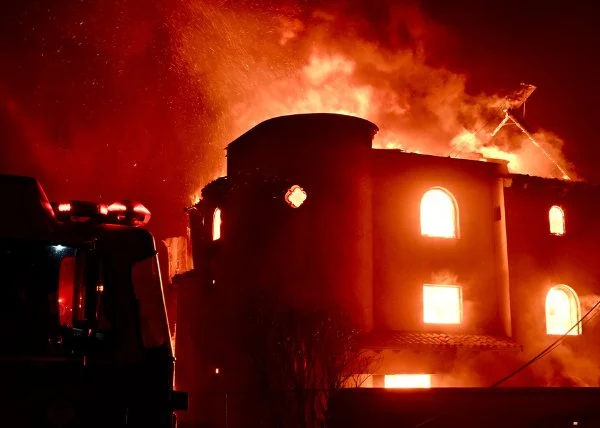
A house burning near the Pacific Coast Highway during the Palisades Fire on January 7, 2025.
1. Like-for-Like Rebuild Legislation
One of the most effective recovery tools a city can prepare in advance is Like-for-Like rebuilding legislation.
I’ve seen this succeed in Los Angeles, where homeowners can rebuild in substantially the same location, with an up-to-10% larger footprint and up-to-10% taller building height.
Importantly, these frameworks also allow applicants to retain any previous lawful encroachments—for example, a wall or structure closer to the boundary than current rules allow. The goal is compassion and speed: You can keep those existing encroachments but not exceed them.
The Like-for-Like model provides clarity, fairness, and dignity. Homeowners know they can rebuild largely as before, without being trapped in years of redesign or zoning review.
But this clarity doesn’t happen overnight. Policymakers need to start building the legislative foundations now—drafting the clauses, defining the workflows, and testing the processes—so that when disaster strikes, they’re not designing policy on the fly.
2. Establishing a Source of Truth for Existing Buildings
You can’t rebuild what you can’t define. Every city needs a verified source of truth for its existing building stock—footprints, locations, heights, and floor areas.
This data should live in your assessors’ records and be easy to access and verify. Better yet, municipalities should enable applicants to upload their as-built floor plans into this repository.
Imagine that after a fire, a homeowner logs in, and the system already knows their previous home’s dimensions. They can immediately apply for a Like-for-Like rebuild and receive rapid approval.
That’s not just efficient administration; that’s dignity through data.
3. Training for Disaster Recovery Permits
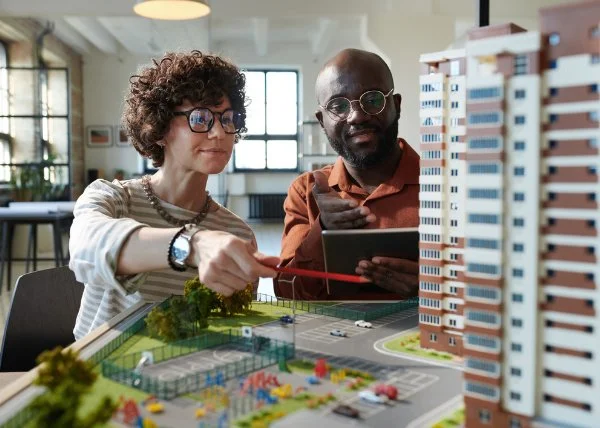
Even the best systems depend on people. Cities need to train their staff to handle recovery scenarios confidently and empathetically.
To help city planners and reviewers, managers can run mock applications, simulate high-volume permit processing, and hold a “recovery permit day” to rehearse workflows.
This transforms assessors into recovery responders—skilled, calm, and ready when it matters most.
4. Defining Pathways to Permitting
Recovery is not one-size-fits-all. Cities need clear, structured pathways.
- Like-for-Like: for fast-track recovery using preapproved parameters
- Relaxed Rules: for modest resilience upgrades such as elevating homes or using fire-resistant materials
- Full Zoning Applications: for applicants who wish to rebuild differently or redevelop entirely
These pathways must be transparent, digital, and easy to navigate. Clarity builds trust, and trust accelerates recovery.
5. Preparing for All Pathways: The Role of AI
Preparedness means readiness for all scenarios. AI can automate Like-for-Like compliance checks—verifying footprint, height, and encroachments instantly—and support zoning-based rebuilds by testing proposals against digital-planning codes.
Post-disaster, half of applicants will want to rebuild as their houses once were, and half will want to reimagine their homes. AI allows both to proceed smoothly within one intelligent, integrated framework.
AI-powered platforms can answer questions about the parameters, like how far you can move the footprint of your house. Even with Like-for-Like plans, you can build something different as long as the size and the “box” you’re building is similar to what you had before.
In Los Angeles, our Archistar tech team has been assisting our AI PreCheck (formerly eCheck) applicants in the City and County of LA, as well as in Malibu, with their questions throughout the permitting submission process.
6. Learn from Each Other
No city should face this challenge alone. Los Angeles is still recovering from devastating wildfires, and there’s much to learn: What’s working? What isn’t? What do they wish they’d set up sooner?
Recovery is a shared learning journey. Each city’s experience helps another prepare better. There needs to be a culture of collaboration and best practices, where local governments, planners, and architects share insights across borders.
Resilience isn’t just about bouncing back. It’s about bouncing forward together.
7. Encouraging Better Rebuilding
Finally, recovery is also an opportunity. Disasters expose weaknesses—in design, materials, and regulation—but they also give us the chance to rebuild with sustainability and resilience in mind.
Cities can introduce incentives that encourage people to build back better, with:
- Grants or fee reductions for meeting higher energy-efficiency or resilience standards.
- Fast-track permits for designs that incorporate flood, fire, or seismic upgrades.
- Partnerships with insurers that reward safer, more sustainable rebuilds.
The message to the community should be clear: We’ll help you get back on your feet, and we’ll support you to build something better than before.
Incentives transform resilience from a burden into an aspiration. They turn recovery into progress.
The Calm Before the Storm
Resilient cities aren’t built in the aftermath of disaster. They’re built today, in moments of calm.
Governments and communities can act now: Write the rules, digitize the data, train the people, share the lessons, and encourage innovation.
When the next disaster comes, communities won’t be left waiting. They’ll be empowered to rebuild their homes and neighborhoods better than before.
Because in the end, resilience isn’t just about how people endure. It’s about how they recover—and how they grow stronger from it.