
AI is already transforming commercial real estate—from site planning and permitting to operations, valuation, leasing, and security—making faster, smarter, and more sustainable development the new baseline rather than a future vision.
The real risk isn’t AI replacing professionals, but falling behind competitors who use it well. When done right, AI reduces manual work, cuts delays and costs, improves design quality, and unlocks ROI across the asset lifecycle.
Successful adoption requires focus on proven use cases, such as generative design, automated compliance, predictive building operations, digital twins, and data-driven investment modeling—where AI delivers tangible value rather than hype.
AI in commercial real estate (CRE) is here now, and it’s here to stay. AI real estate tools are reshaping the industry and the planning, approval, construction, operation, appraisal, and marketing of commercial buildings.
Some property developers, asset managers, architects, and other commercial real estate professionals may be concerned that AI will replace them. However, it’s more likely that competitors using AI will replace them if they don’t adopt AI technology accordingly.
With AI-driven tools, designers can more efficiently create higher quality and more adaptable models. As a result, property developers and construction crews benefit from fewer delays and more accurate models. AI technology in commercial real estate can take control of a lot of manual work, helping to relieve regulatory bottlenecks and affordability pressures by reducing the time and risk for producing efficient, adaptable spaces.
On the other hand, mere adoption of AI does not guarantee success. Worldwide, commercial real estate firms and investors are betting huge amounts on AI tools, yet they may struggle to deploy them for measurable value.
That’s why in this article, we explore nine AI technologies reshaping how commercial real estate is analyzed, developed, and managed today. Adopting AI is no longer optional. Real estate and architecture firms, city planners, and universities preparing their students must face the reality of the rise of AI in commercial real estate—but do so with a clear-eyed view of what really works.

1. AI-driven site planning with generative design
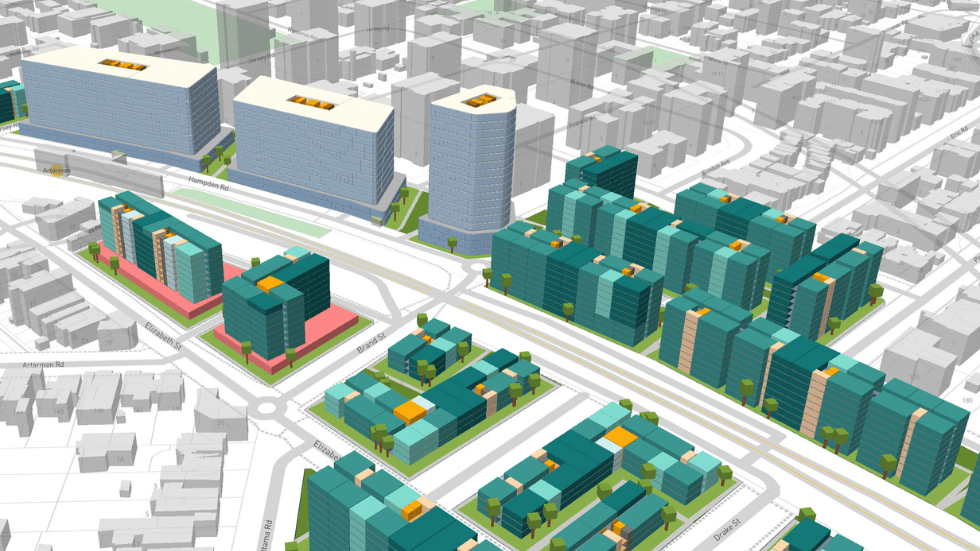
Example: Archistar 3D Generative Design Add-On with Autodesk Forma
Generative design has matured into one of commercial real estate’s most proven and impactful AI-based applications. When site planning with a generative design platform, what used to take weeks of manual modeling could now be done minutes. As a result, developers and architects can explore many more possibilities to find the highest-performing project configurations that derive the most value out of the available land. And they do so early in the design process.
A generative design site-planning platform can rapidly test thousands of development layout plans and optimize them for:
- Gross floor area (GFA), gross building area (GBA), and floor space ratio (FSR)
- Daylight access
- Energy performance
- Cost efficiencies
- Local zoning and building code constraints
- View corridors and amenity space
- Building ventilation, total stories, and number of units
2. Autonomous building operations & predictive maintenance
Examples:BrainBox AI, Honeywell Forge
These AI technologies could also be called Smart Buildings 2.0. They turn commercial real estate buildings into self-managing assets that predict maintenance and other issues that need attention before they become costly problems. AI-driven autonomous building operations tools have become extremely viable over the last few years. Their ROI in operational savings is noticeable immediately and quite significant over the long term.
AI-powered connected building systems analyze historical performance data to:
- Anticipate equipment breakdowns before they cause big problems
- Autonomously optimize HVAC and lighting use
- Reduce energy consumption significantly
- Improve tenant satisfaction and retention
3. Building permit & regulatory compliance automation
Examples: Archistar AI PreCheck, Multi-AR
Building permit and regulatory compliance approval cycles have ballooned to months or even years, forcing debilitating holding costs upon developers. Fortunately, emerging AI-accelerated building permit and compliance tools have become a transformative force for commercial real estate.
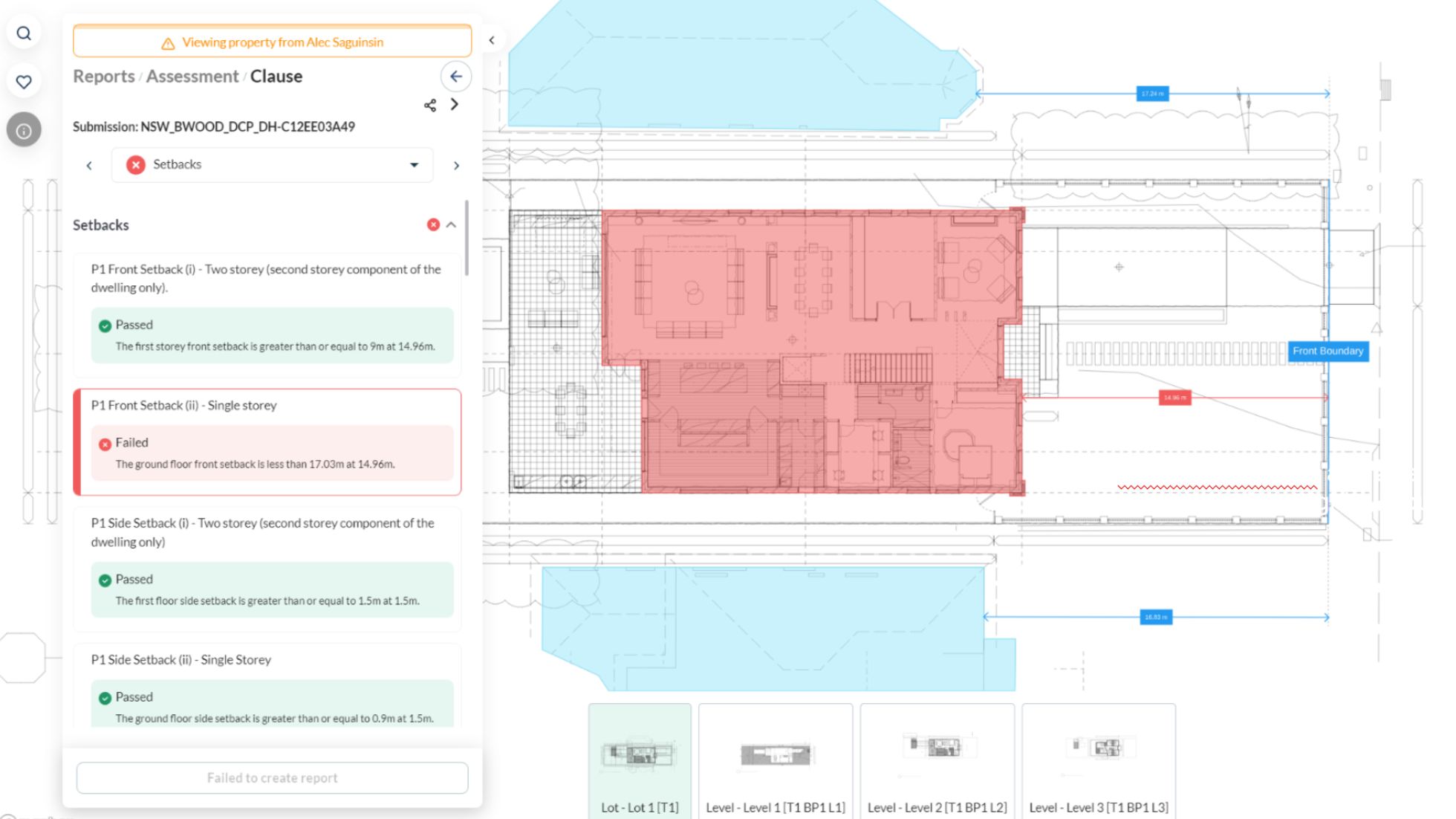
Technology like Archistar AI PreCheck (formerly eCheck) can read BIM models and other digital data directly, performing code checks in an instant and flagging noncompliant elements in comprehensive reports. This allows designers to address issues quickly—before submission.
Automating compliance and permitting workflows removes the lengthy manual review of PDFs and drawings. As a result, approval cycles can drop dramatically from many months to just days. Resubmissions also become much more rare.
By adopting automated review systems, municipal city planners and developers can reduce development timelines and costs while addressing global housing shortages.
AI-driven building permit and regulatory compliance tools can:
- Read BIM and other digital data directly
- Evaluate zoning and building codes
- Automatically flag compliance issues
- Shorten permit reviews from months to days
- Reduce developer holding costs, potentially by millions for large-scale projects
4. AI for underwriting, valuation & investment modeling
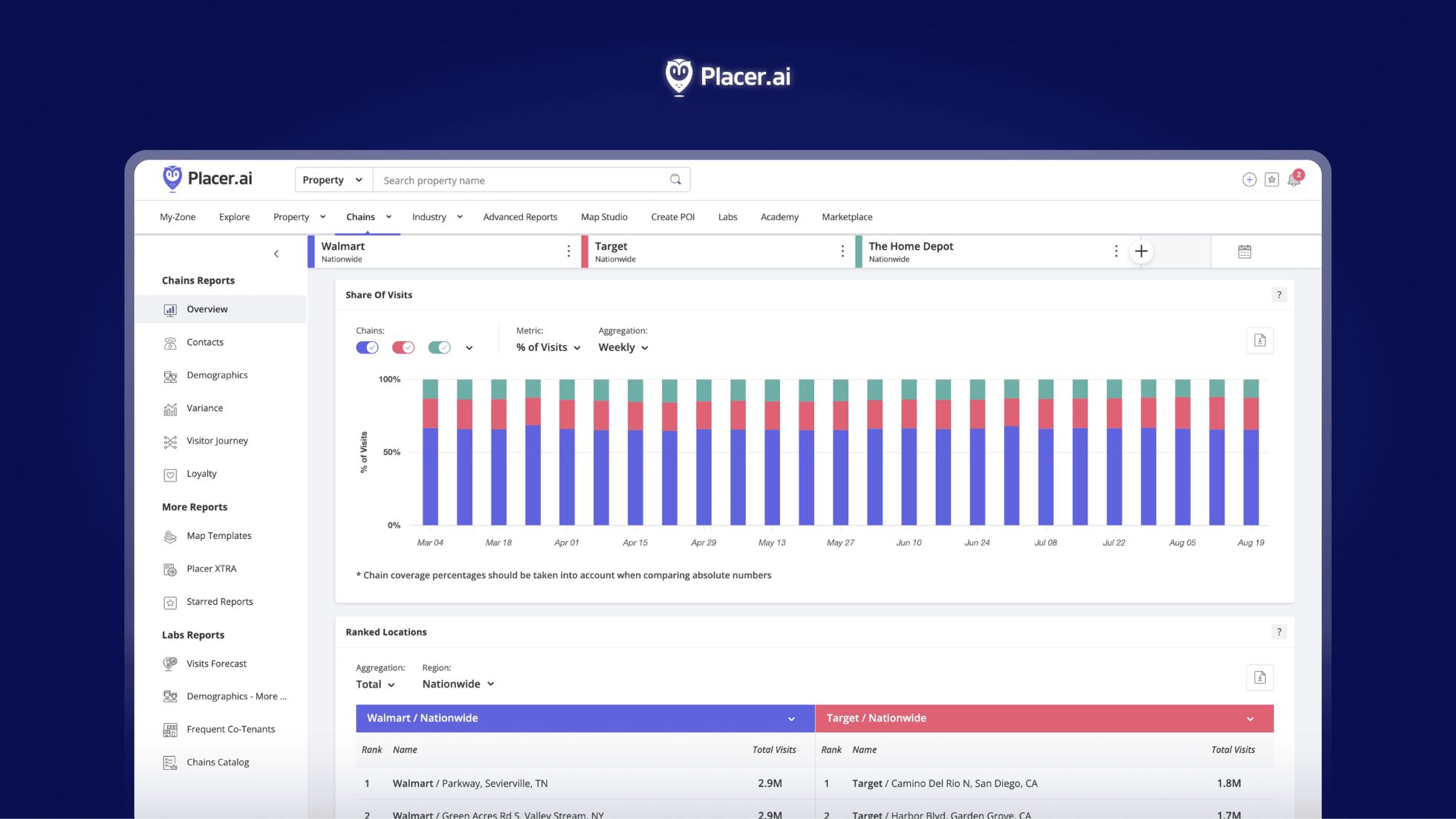
AI data analysis platforms have supercharged decision making and portfolio performance in commercial real estate. These tools fuse thousands of data streams from economic indicators, demographic shifts, tenant behavior, and other market comparables to generate real-time valuations and risk models.
AI underwriting tools benefit commercial real estate with:
- Faster and more accurate deal screening
- Early identification of undervalued assets
- Predictive analysis for rents, absorption, and demand
- Streamlined financial modeling
- Live economic and demographic feeds
- Tenant movement and foot-traffic intelligence
5. Digital twins with AI-enhanced lifecycle simulation
Examples: Willow digital twin, Autodesk Tandem, Bentley iTwin
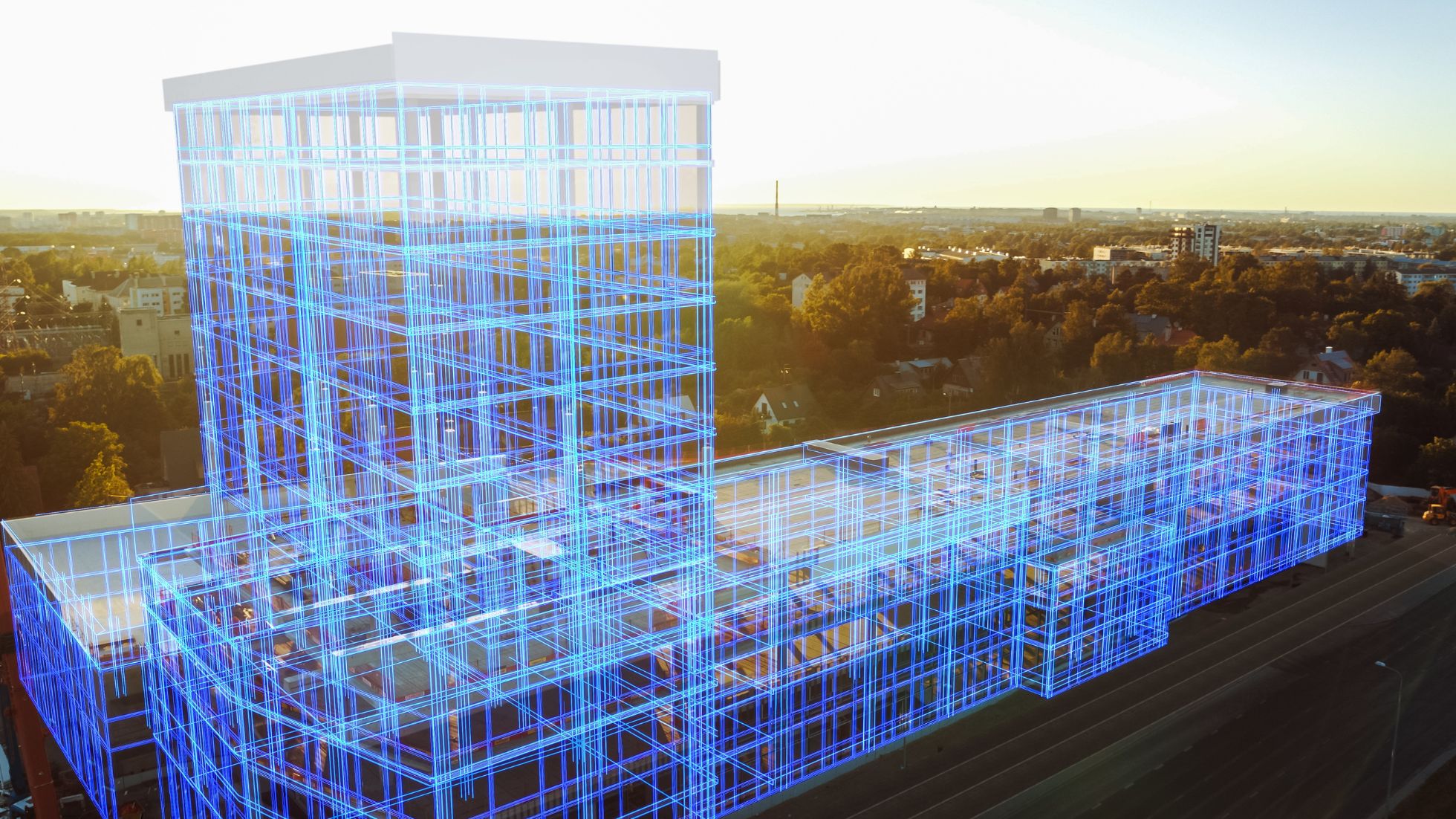
Digital twins’ surging adoption in commercial real estate coincided with their integration of AI-enhanced full lifecycle management. These AI-accelerated digital twins improve building designs before construction. They are powerful tools for maximizing operational efficiency, managing lifecycle costs, and meeting ESG requirements.
AI-optimized digital twins can simulate:
- A building’s energy performance under various conditions
- Future maintenance needs
- Operational costs
- Carbon impacts for ESG reporting
- Occupancy flows and congestion
- Renovation and retrofit outcomes
6. AI-powered lease abstraction and portfolio document intelligence
Examples: Prophia, MRI Contract Intelligence, JLL Azara
High-powered AI document intelligence tools are industry standard for reading, interpreting, and validating thousands of document types across an entire real estate portfolio. They provide clarity for portfolio managers and reduce risk during acquisitions, refinancing, and operational planning.
AI document intelligence tools can:
- Extract clauses, obligations, and financials
- Detect anomalies or missing terms
- Sync data with underwriting and asset-management systems
- Reduce legal review time from days to minutes
- Process hundreds of page types
- Validate data across portfolios
7. AI-driven space utilization and hybrid workplace optimization
Examples: VergeSense, Density.io, Envoy
Employers continue to seek the perfect hybrid-work ratio and office requirements for the shifting hybrid work landscape. Real-time sensor data can now inform AI-powered occupancy intelligence tools on how tenants truly use a space. As organizations downsize footprints, consolidate, or adopt flexible models, this data-driven approach is essential.
AI-powered space-utilization systems help office-building stakeholders to:
- Identify underutilized areas with heatmaps
- Predict hybrid work peak demand
- Redesign spaces for collaboration
- Optimize leasing strategies and tenant experience
- Justify renovations or reconfigurations
- Plan a dynamic space

8. Generative AI for visualization and immersive AR/VR environments
Examples: NVIDIA Omniverse, Unity for AEC, Midjourney architectural concept imagery
Client and tenant engagement in commercial real estate have undergone a metamorphosis with the rapid advancement of generative AI for imagery. Architectural visualization using generative AI can quickly tell a story for pre-leasing and pre-sales material. The technology enables rapid iteration with high-resolution, photo-realistic renderings.
With today’s AI visualization and AR/VR tools, developers, designers, and marketers can:
- Create realistic renderings from text prompts
- Auto-stage interiors
- Produce immersive virtual walkthroughs
- Personalize visualizations for different tenant types
- Simulate tenant fit-outs

9. AI-integrated security, access control & cyber protection for smart buildings
Examples: Kisi, Verkada, BioConnect
A multilayered AI security approach for connected smart buildings solidifies tenant trust and protects assets at the highest level.
Today’s sophisticated AI-assisted monitoring systems combine:
- Facial recognition with liveness detection
- Multi-factor behavioral AI signatures (such as gait analysis)
- Anomaly detection for unauthorized access
- Cybersecurity for IoT-connected devices
- Real-time identity verification
- Cybersecurity overlays for smart buildings
The time is now for AI in commercial real estate
A thriving ecosystem of AI-driven technology for commercial real estate includes autonomous smart building systems, AI building permit automation, generative design tools, and various data analysis, security, and intelligence platforms. There are even options for carbon-reduction intelligence and meeting ESG guidelines.
AI greatly affects every aspect of the global commercial real estate landscape right now. Commercial real estate developers, city planners, asset managers, architects, home builders, and agents can all benefit from creating faster, smarter, more profitable, and more sustainable projects using the latest AI commercial real estate tools.